
101 Ways: How NOT to Do Business
12 books. 1212 mistakes. Each book covers one domain. One mission: learn from what goes wrong before it costs you everything.
Nine jewels for Navaratri. Three more for Diwali.
12 books. 1212 mistakes. Each book covers one domain. Together, they cover the full lifecycle of a business. Paperbacks tentative by end of the year. View the full series on Amazon ↗

101 Ways: How NOT to Do Business
The Entrepreneur's Guide to Avoiding Expensive Mistakes, Dangerous Myths and Uncomfortable Truths
101 entrepreneurial mistakes, myths, and misjudgments. The foundation book.
Entrepreneurship isn't an escape from responsibility. It is an invitation to take on more of it.
Falling in love with an idea makes evidence inconvenient.
You may exchange one boss for 50 customers, employees, investors and suppliers.
Their business model may depend on circumstances you don't have.

101 Ways: How NOT to Work With Others in Business
Mistakes Founders Make With Employees, Customers, Partners, Investors & Others
The mistakes that turn partners, co-founders, and clients into adversaries.
Warmth without structure is the fastest way to lose both the friend and the business.
If it isn't written down, it isn't agreed upon. Memory is the most unreliable contract.
Unspoken problems don't disappear. They become resentment, then rupture.
Kinship doesn't equal competence. Without clear roles, you lose both.

101 Ways: How NOT to Market in Business
Don't Chase Attention. Become Worth Remembering.
Marketing without strategy is just noise. Stop spending on attention that doesn't convert.
Attention is not demand. A viral audience can be completely irrelevant to your business.
Content without a point of view becomes noise. Nobody shares "me too" content.
Distribution beats omnipresence. Pick two channels and dominate them.
A viral audience can be completely irrelevant to your business. Relevance beats reach.

101 Ways: How NOT to Sell in Business
Selling isn't a personality trait. It's a skill.
The mistakes that cost you deals and revenue.
It doesn't. Without a sales engine, even the best product waits on word of mouth.
The customer should do most of the talking. You learn nothing while speaking.
You cannot prescribe before understanding the disease. Diagnosis comes first.
Nobody buys a drill because they want a drill. They buy the hole.

101 Ways: How NOT to Use AI in Business
AI is everywhere. Using it badly is worse than not using it at all.
The AI mistakes that waste money, break workflows, and create false confidence.
First fix it. Then automate it. Automation at scale is just faster failure.
Tool sprawl is the new technical debt. Every tool needs maintenance, training, and integration.
AI is a force multiplier. It amplifies whatever you already are, good or bad.
Feeding customer data into third-party models without governance is a lawsuit waiting to happen.

101 Ways: How NOT to Build a GTM Engine
The Hard Work of Taking Your Product to Market
The GTM mistakes that kill momentum.
Growth magnifies problems. Pouring fuel on a fire you haven't controlled yet is strategy.
Hope is not a hiring plan. Every headcount before revenue is a bet against your runway.
If you can't explain what you do and for whom in one sentence, the market won't figure it out for you.
A busy launch week means nothing if the pipeline is empty by month two.

101 Ways: How NOT to Do Digital Marketing
The Mistakes That Make Your Business Invisible Online
The digital mistakes that burn budget without building pipeline.
Likes don't pay salaries. A large following with no pipeline is an expensive hobby.
Content without conviction is wallpaper. Nobody stops to read generic advice.
Consistency creates memory. Inconsistency creates noise.
Vanity metrics are beautiful and useless. Tie every campaign to revenue or retention.

101 Ways: How NOT to Do Software
Mistakes That Make Software Expensive, Fragile and Irrelevant
The mistakes that turn a product into a liability.
Technology makes it incredibly easy to build the wrong thing faster.
Feature accumulation can hide product failure. A bloated product is a confused product.
Technology gets copied. Relationships, trust, and execution are harder to replicate.
The moment you become emotionally attached, you stop listening to the market.

101 Ways: How NOT to Do Cybersecurity
Mistakes That Put Your Business, Customers and Reputation at Risk
The security mistakes that expose your business, your data, and your customers.
Automated attacks don't check your revenue. They scan for vulnerabilities, not size.
Your weakest firewall is the person who clicks every link. Train them or pay for the breach.
Security is not a one-time setup. It's a practice. What worked last year may be exposed today.
A single compromised password can open your entire infrastructure. Multi-factor is not optional.
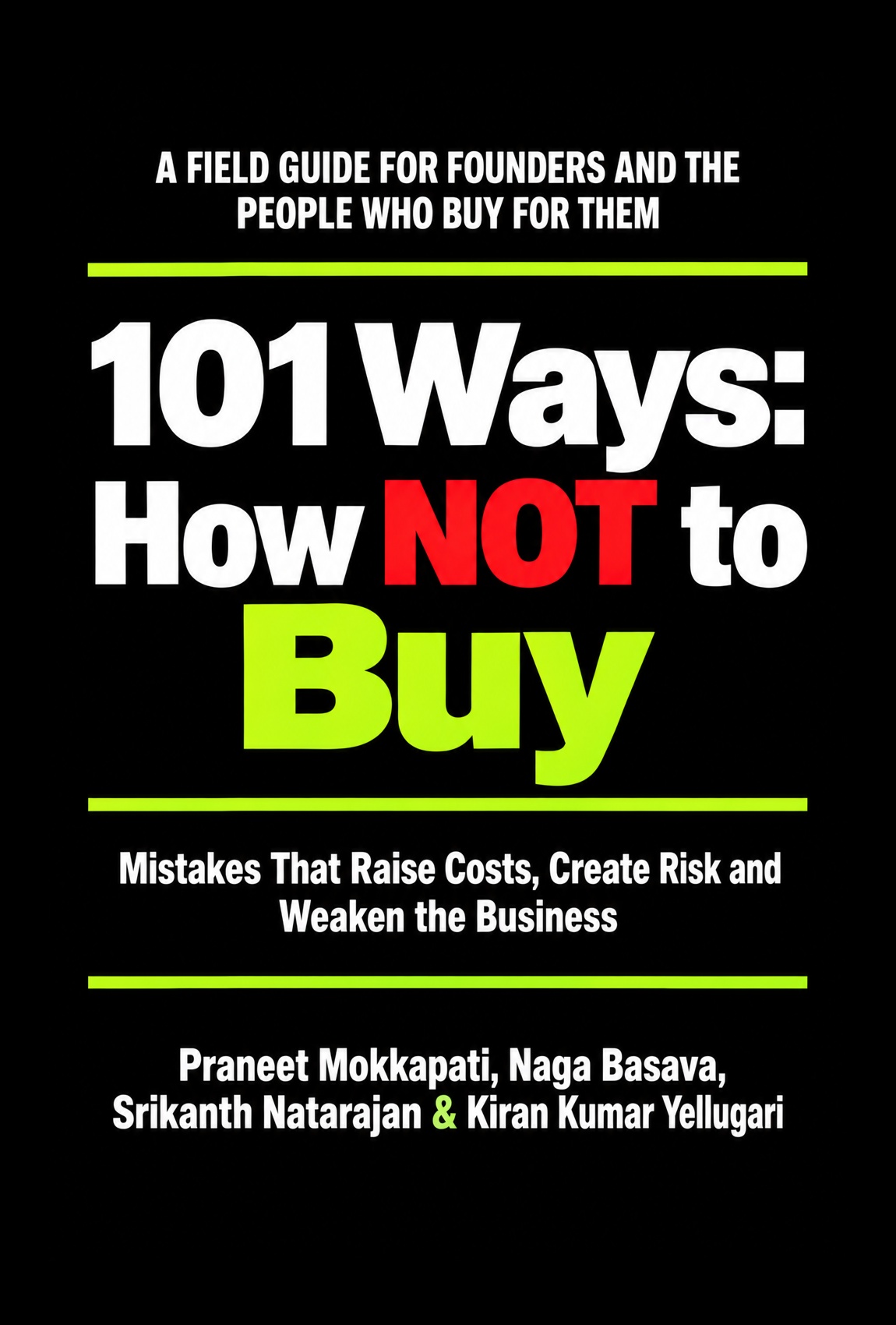
101 Ways: How NOT to Buy
Mistakes That Raise Costs, Create Risk and Weaken the Business
The procurement mistakes that inflate costs, create risk, and weaken the business.
Spending the remaining budget before it lapses — because unspent money feels like lost money.
Choosing a product before writing down, in plain language, what outcome the business needs.
Treating symptoms with expensive products — buying monitoring for outages caused by bad deploys.
Automating, outsourcing, or upgrading work that should simply stop — paying to do unnecessary things faster.
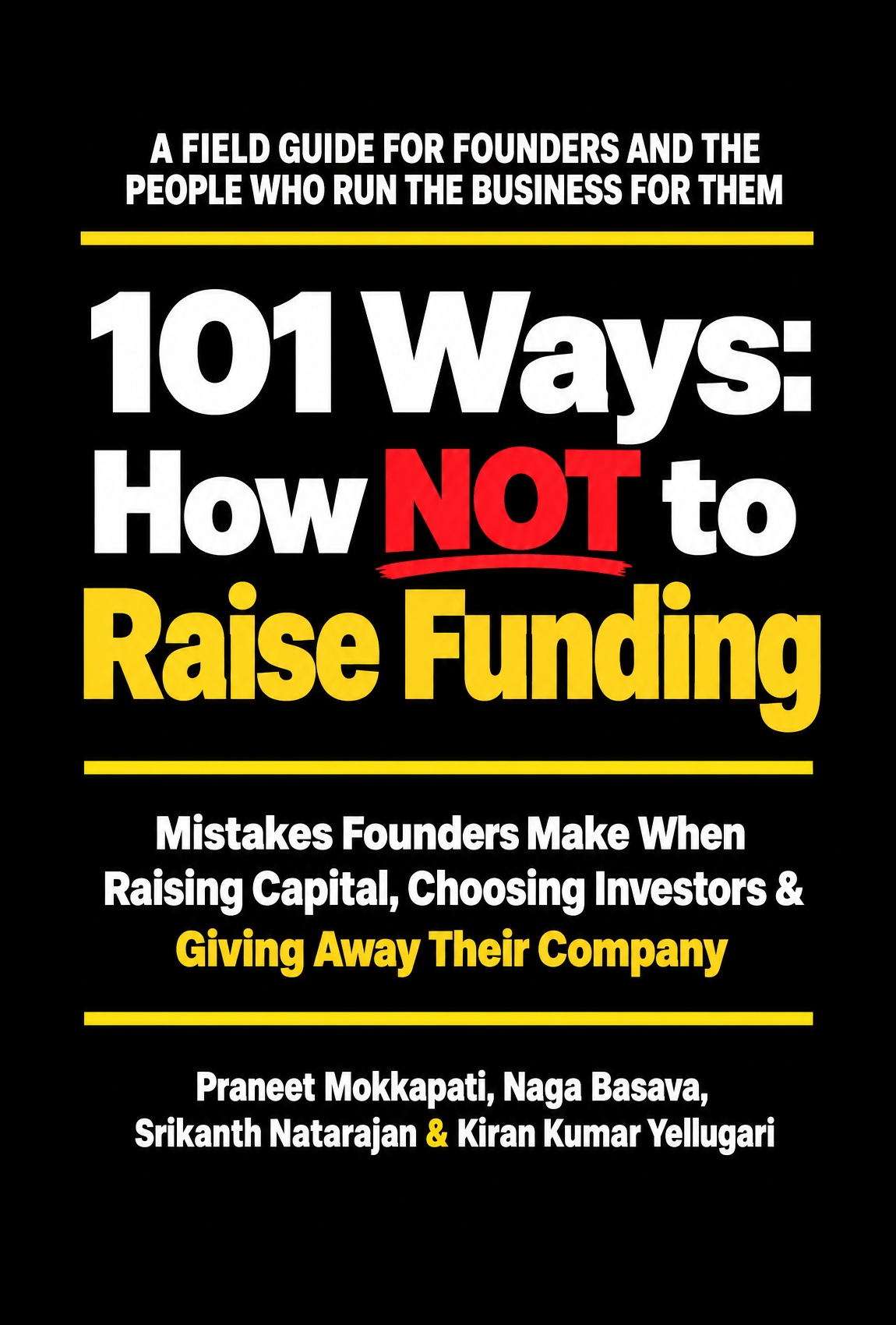
101 Ways: How NOT to Raise Funding
Mistakes Founders Make When Raising Capital, Choosing Investors & Giving Away Their Company
Fundraising is not about convincing someone to give you money. It's about raising the right capital, from the right people, at the right time.
An investor approaches you with a cheque and no prep from you. The money feels like validation. It rarely is.
Vague plans — hire people, grow faster — mean nothing to an investor. They have heard it before.
Running low on cash is not the same as needing external funding. Sometimes it means you are spending too much.
Extra runway creates pressure to spend, grow, and scale before the business is ready.
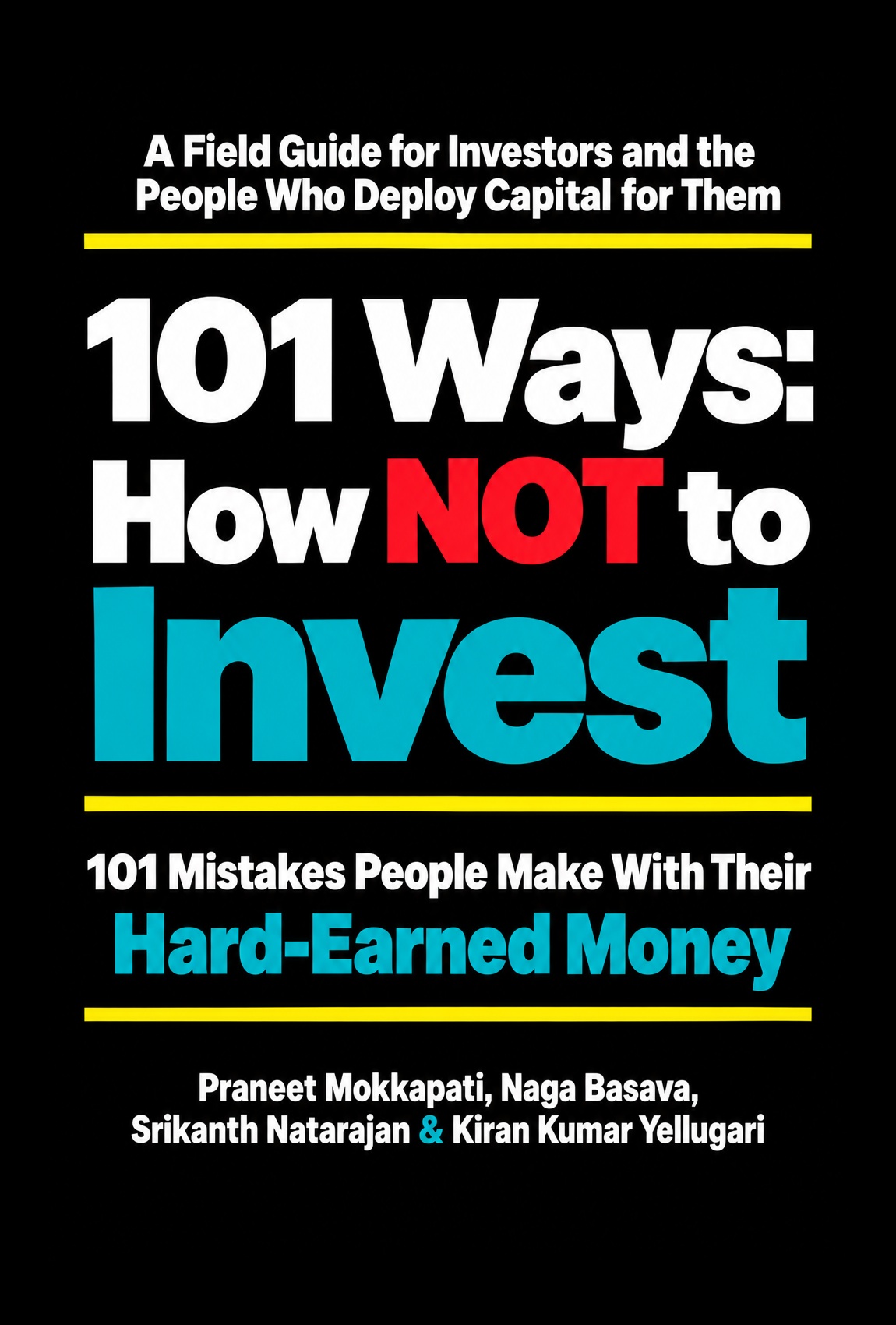
101 Ways: How NOT to Invest
101 Mistakes People Make With Their Hard-Earned Money
Your money has only one job: to work for you. Your job is to make sure you do not send it to work somewhere you have not investigated.
Capital at risk that, if lost, damages your ability to live, pay obligations, or recover financially.
Using money for job loss, medical crisis, or urgent repairs as investment capital — exposed when life throws a curveball.
Putting 1-2 year cash into volatile, illiquid assets — a downturn at the wrong moment turns a planned expense into a crisis.
Bank-account money is savings with a different purpose, not uninvested capital waiting to be gambled.